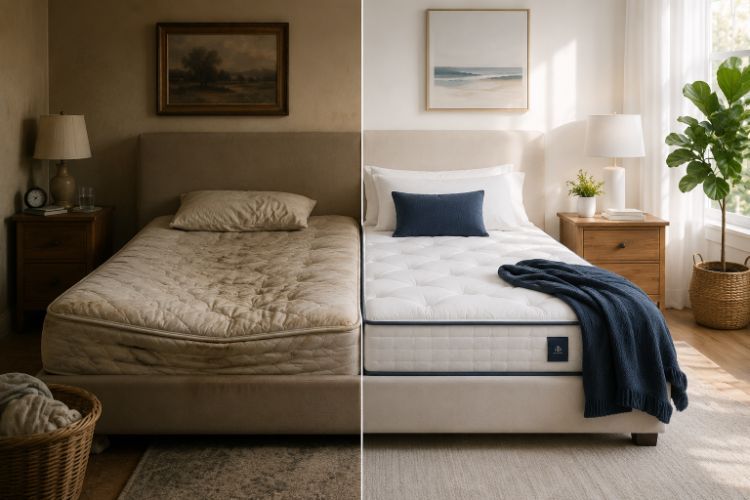
When Should You Replace Your Mattress?
Posted on Thursday, March 19, 2026
To keep this site free for consumers, we receive compensation for customer referrals.
Many people keep their mattress far longer than they should.
Over time, even the best mattress gradually loses support, comfort, and structural integrity. Unfortunately, mattress wear often happens slowly enough that sleepers adapt without realizing how much their sleep quality has declined.
If you’ve been waking up stiff, restless, or uncomfortable, your mattress may be part of the problem.
So how do you know when it’s time to replace your mattress?
There isn’t a single universal timeline, but there are several common signs that indicate your mattress may no longer be providing proper support.
How Long Does a Mattress Typically Last?
Most mattresses last between seven and ten years.
However, lifespan depends heavily on:
- Mattress quality
- Materials used
- Body weight
- Sleeping habits
- Maintenance and care
Lower-quality foam mattresses may begin deteriorating sooner, while premium latex or hybrid models can last significantly longer.
You Wake Up Sore or Stiff
One of the clearest warning signs is waking up with aches and stiffness.
An aging mattress often loses its ability to support proper spinal alignment.
This can create pressure buildup around the shoulders, hips, and lower back.
If discomfort improves after getting out of bed and moving around, your mattress may no longer be supporting your body correctly.
Visible Sagging or Indentations
Visible body impressions are another major red flag.
Over time, mattress materials compress repeatedly under pressure.
Foam can soften and coils can weaken, leading to:
- Sagging areas
- Uneven surfaces
- Deep body impressions
- Reduced support
Even moderate sagging can affect sleep posture and comfort.
A mattress should maintain a relatively even sleep surface.
You Sleep Better Somewhere Else
Many people notice they sleep better in hotels or guest rooms.
If you consistently wake up feeling more rested away from home, your mattress could be contributing to poor sleep quality.
This comparison often reveals how much your current mattress has deteriorated.
Increased Tossing and Turning
As mattresses wear down, pressure relief often declines.
This can cause discomfort that leads to more nighttime movement.
If you constantly reposition during the night trying to get comfortable, your mattress may no longer be relieving pressure effectively.
Your Mattress Feels Noisier
This issue appears more commonly with older innerspring and hybrid mattresses.
Over time, coils can weaken or shift, causing squeaking and creaking sounds.
While some noise may seem minor, it can indicate that internal support components are deteriorating.
Allergies Are Getting Worse
Mattresses accumulate:
- Dust mites
- Dead skin cells
- Moisture
- Allergens
Even with mattress protectors and regular cleaning, older mattresses can become reservoirs for allergens.
If allergies worsen overnight or you wake up congested regularly, replacing your mattress may help improve your sleep environment.
Motion Transfer Is Becoming More Noticeable
Couples often notice increased motion transfer as mattresses age.
Foam layers may soften unevenly, and support systems can lose stability.
If your partner’s movements suddenly feel more disruptive than they used to, mattress deterioration may be contributing.
Your Mattress Has Lost Edge Support
Weak edges can make the mattress feel unstable.
This issue becomes especially noticeable when:
- Sitting on the edge
- Getting in and out of bed
- Sharing the mattress with a partner
Poor edge support can make the usable sleep surface feel smaller.
Changes in Your Body or Sleep Needs
Sometimes the mattress itself isn’t the only factor.
Sleep preferences and support needs evolve over time.
For example:
- Weight changes can affect firmness preferences
- Chronic pain may require more pressure relief
- Hot sleepers may benefit from cooling materials
- Couples may prioritize motion isolation more
A mattress that once felt perfect may no longer suit your current needs.
When a Mattress Topper Isn’t Enough
Some people try extending mattress life with a topper.
A quality topper can temporarily improve comfort, but it cannot fix a mattress with structural support issues.
If sagging, instability, or major wear exists underneath, replacing the mattress is usually the better long-term solution.
Tips to Extend Mattress Lifespan
Although every mattress eventually wears out, proper care can help maximize longevity.
Use a Mattress Protector
A protector helps defend against spills, moisture, allergens, and dust buildup.
Rotate the Mattress
Some mattresses benefit from periodic rotation to encourage even wear.
Use Proper Support
Ensure the mattress sits on a supportive base or foundation.
Follow Manufacturer Guidelines
Some warranties require specific support systems and care instructions.
Should You Replace Your Mattress Sooner?
In some situations, replacing your mattress earlier makes sense.
You may want to upgrade sooner if:
- You consistently sleep hot
- You’re experiencing chronic discomfort
- Your sleep quality has noticeably declined
- Your current mattress lacks motion isolation
- Your mattress no longer matches your sleep preferences
Better sleep affects energy, recovery, focus, and overall health.
Final Thoughts
A mattress doesn’t have to be visibly destroyed before it starts affecting your sleep.
Subtle changes in support, comfort, pressure relief, and motion isolation can gradually reduce sleep quality over time.
If your mattress is sagging, uncomfortable, noisy, or simply no longer helping you wake up refreshed, it may be time for a replacement.
Investing in a supportive, comfortable mattress can make a meaningful difference in how you sleep and feel every day.

Related Blog Posts